At the end of July, I had the opportunity to travel to Japan for KubeCon + CloudNativeCon Japan 2026, held in Yokohama. After attending several KubeCons in Europe and North America over the years, experiencing the cloud native community in Japan was something I had been looking forward to for a long time.
KubeCon + CloudNativeCon Japan remains significantly smaller than the European or North American editions, and I think that is actually part of what made the experience so interesting.
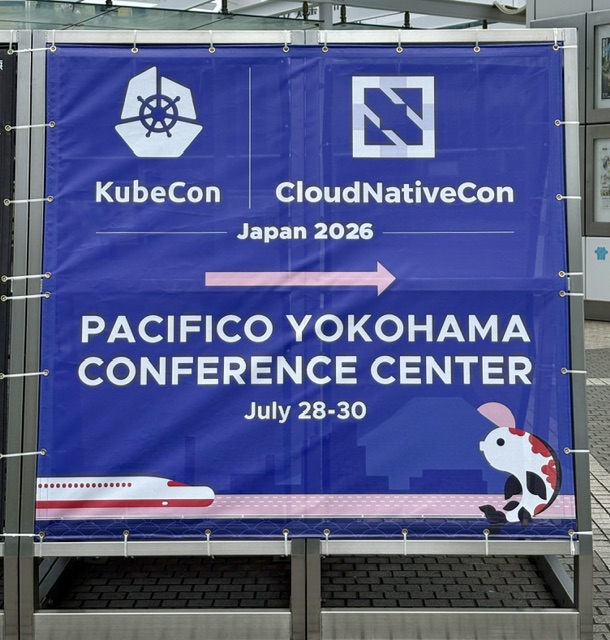
According to the official CNCF Transparency Report, the event had 1,495 registrations, representing 478 companies, with an impressive 96% attendance rate. Even more interesting, 44% of participants were attending KubeCon for the first time.
A few numbers particularly caught my attention:
- 1,495 registrations
- 841 CFP proposals submitted
- 478 companies represented
- 44% first-time attendees
- 78.2% of attendees came from Asia
- Only 17 attendees came from Canada
For someone traveling all the way from Canada, that last statistic made the journey feel even more unique. Japan naturally dominated attendance with 940 participants, followed by the United States, India, Korea, Singapore and China.
Unlike the massive KubeCon events with tens of thousands of participants, the scale in Yokohama made conversations easier. You could meet someone during a session, continue the discussion in the hallway, see them again at the Project Pavilion, and eventually end up talking over dinner.
That feeling of accessibility was one of my favorite aspects of the conference.
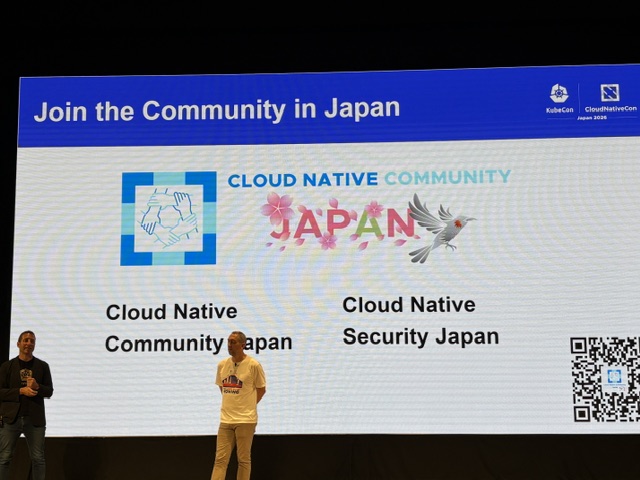
Cloud native and AI are becoming the same conversation
Unsurprisingly, AI was everywhere.
we need to extend those models to a world where applications are no longer only executing predefined code.
They are increasingly making decisions.
AI agents can call APIs, access tools, retrieve information and potentially modify infrastructure. This creates completely new questions around workload identity, authorization, secrets, observability, policy enforcement and runtime security.
For security teams, the challenge will not simply be how do we secure Kubernetes?
The question is increasingly becoming:
How do we securely operate autonomous workloads on Kubernetes?
This convergence between Kubernetes, AI infrastructure and security was probably my biggest technical takeaway from KubeCon Japan.
Japan’s approach to cloud native is fascinating
Another interesting aspect of the conference was understanding the Japanese cloud native ecosystem.
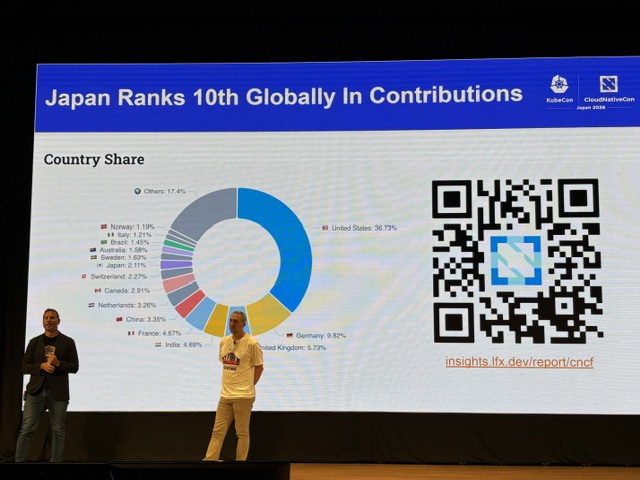
During KubeCon, CNCF and SlashData released new research estimating that Japan now has approximately 950,000 cloud native developers.
What I found particularly interesting is that this growth does not necessarily mean abandoning traditional infrastructure.
Japan continues to have a significant amount of on-premises and hybrid infrastructure while simultaneously increasing its adoption of Kubernetes, platform engineering and cloud native technologies. The transparency report specifically highlights this hybrid approach as part of Japan’s distinct path toward cloud native maturity.
Coming from the financial industry, this resonates strongly with me.
Large regulated enterprises rarely move from legacy infrastructure to public cloud overnight. The reality is usually much more complex: public cloud, private cloud, Kubernetes, traditional infrastructure and increasingly AI platforms all need to coexist.
Cloud native technologies are becoming the abstraction layer connecting these environments.
And that makes open standards and open source even more important.
The community side of KubeCon
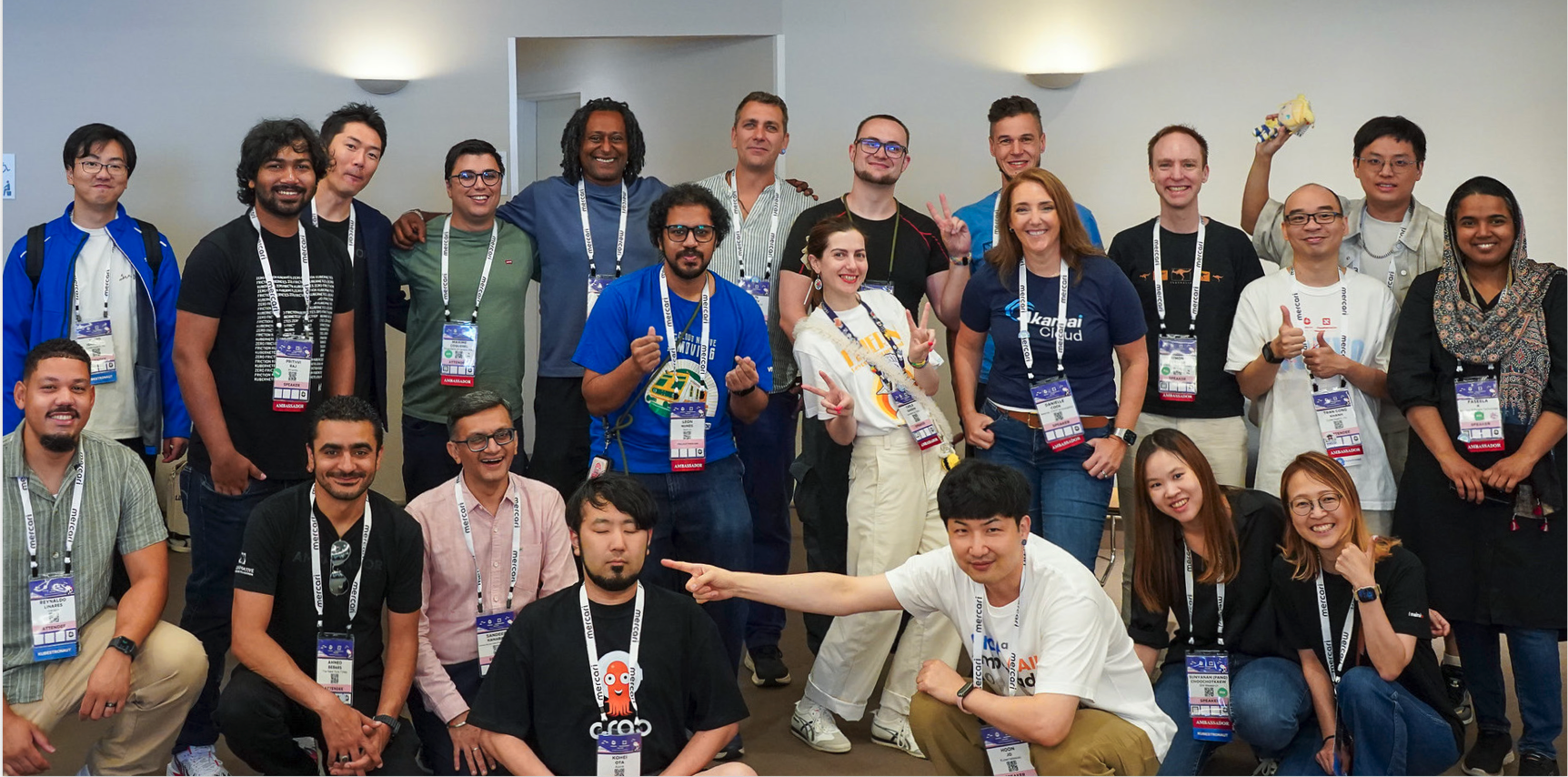
As a CNCF Ambassador, the community aspect of KubeCon is always as important to me as the technical content.
The conference provided several opportunities for attendees to interact directly with CNCF projects and maintainers through the Project Pavilion, Maintainer Track, project lightning talks and maintainer meetups. The transparency report recorded 17 participating project tables, nine project lightning talks and 13 Maintainer Track sessions.
These areas are often where the most interesting conversations happen.
A 30-minute conversation with a maintainer about why a project made a particular architectural decision can sometimes be more valuable than an entire presentation.
It is also one of the characteristics of the CNCF ecosystem that I appreciate the most. Behind technologies deployed by some of the world’s largest organizations are communities of people willing to openly discuss design decisions, failures, security challenges and future ideas.
KubeCon makes these connections possible.
Experiencing Yokohama and Japan
Of course, traveling to KubeCon Japan wasn’t only about Kubernetes.
Yokohama was a fantastic location for the event. The area around PACIFICO Yokohama is extremely walkable, with the waterfront, restaurants and public transportation all close to the conference.
Staying near Yokohama’s harbour also made it easy to experience the city outside conference hours.
And then there was the food.
One of the most memorable evenings was a dinner in a traditional Japanese restaurant with members of the community. Some dishes were very different from what I would normally encounter back home — including Ume Suishō, a dish combining plum with shark cartilage.
Conferences create technical connections, but these moments create personal ones.
Sitting around a table thousands of kilometres from home, sharing food and discussing technology, open source, careers and life with people from different countries is part of what makes travelling for community events so rewarding.
A different kind of KubeCon
KubeCon Japan felt different from KubeCon Europe or North America.
Smaller.
More regional.
But certainly not less interesting.
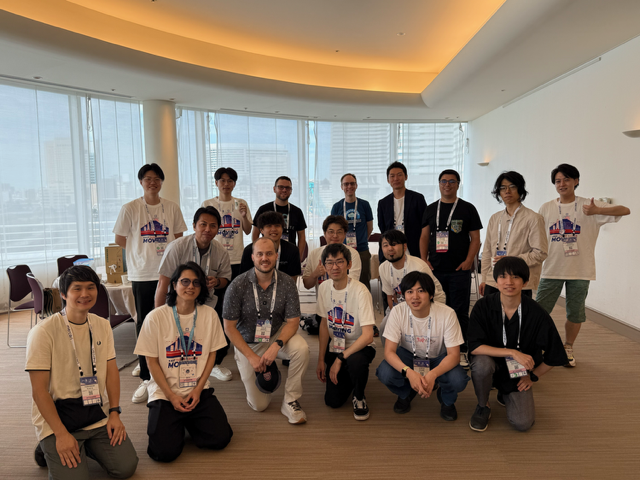
In some ways, the smaller scale actually made the event more human. It was easier to have meaningful conversations and spend time with people instead of constantly rushing between sessions in an enormous convention center.
At the same time, the technology discussions were incredibly forward-looking.
AI infrastructure, Kubernetes, platform engineering, observability, security and open source are clearly converging. And Japan is becoming an increasingly important part of that evolution.
The fact that almost half of the attendees were experiencing their first KubeCon also shows how much potential there still is for the cloud native community to grow in the region.
See you again, Japan 🇯🇵
After several days in Yokohama and Tokyo, it was eventually time to head back to Canada.
I left Japan with new ideas, new connections and an even stronger conviction that Kubernetes will play a fundamental role in the next generation of AI infrastructure.
But I also left wanting to come back.
Japan was one of those trips where, even while heading to the airport, I was already thinking about returning, next time hopefully with my family and with much more time to explore the country.
Thank you to the CNCF, Linux Foundation, organizers, volunteers, speakers, maintainers and everyone from the community who made KubeCon + CloudNativeCon Japan 2026 possible.
It was a long journey from Québec to Yokohama.
It was absolutely worth it.
また会いましょう, Japan! 🇯🇵